
When Schools Fail Their Children
Overcoming the Fear of Flying: Identifying the 3 Core Anxiety Types and Finding Solutions
November 22, 2025
Could the attack on Delhi CM have been prevented
December 6, 2025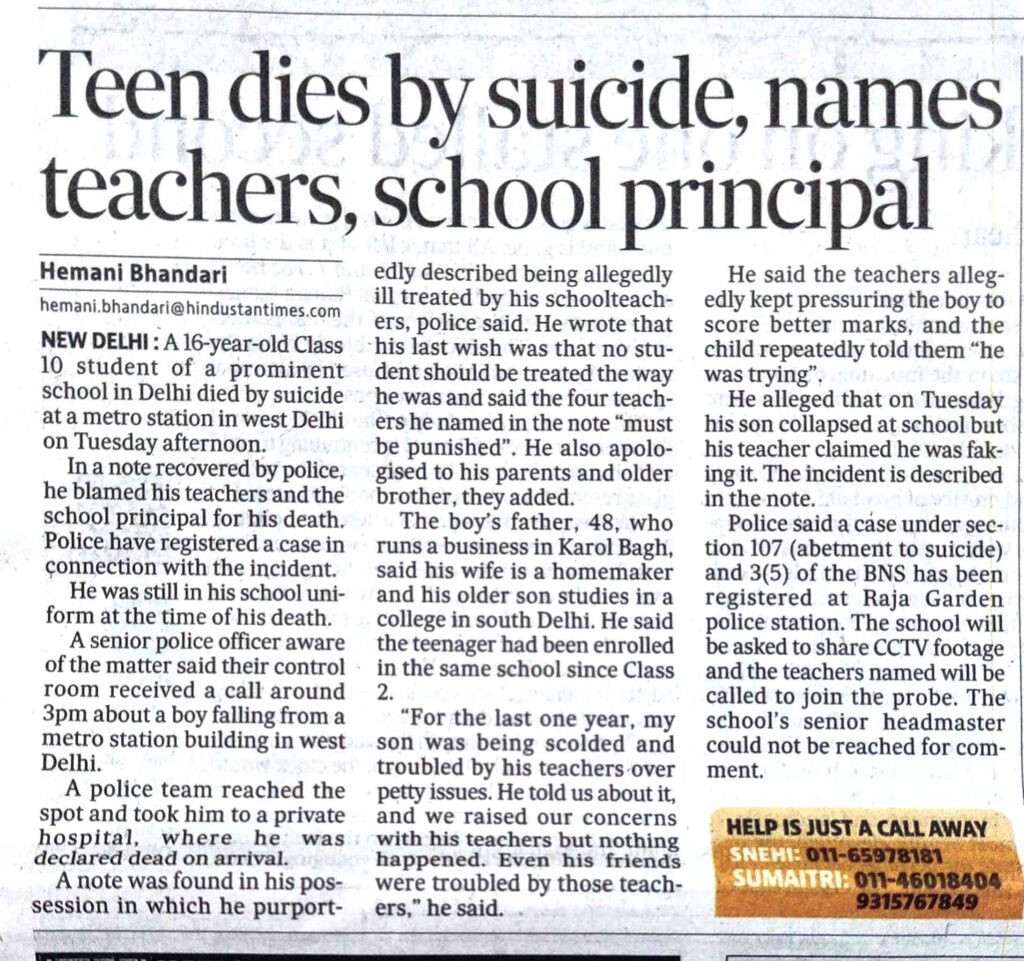
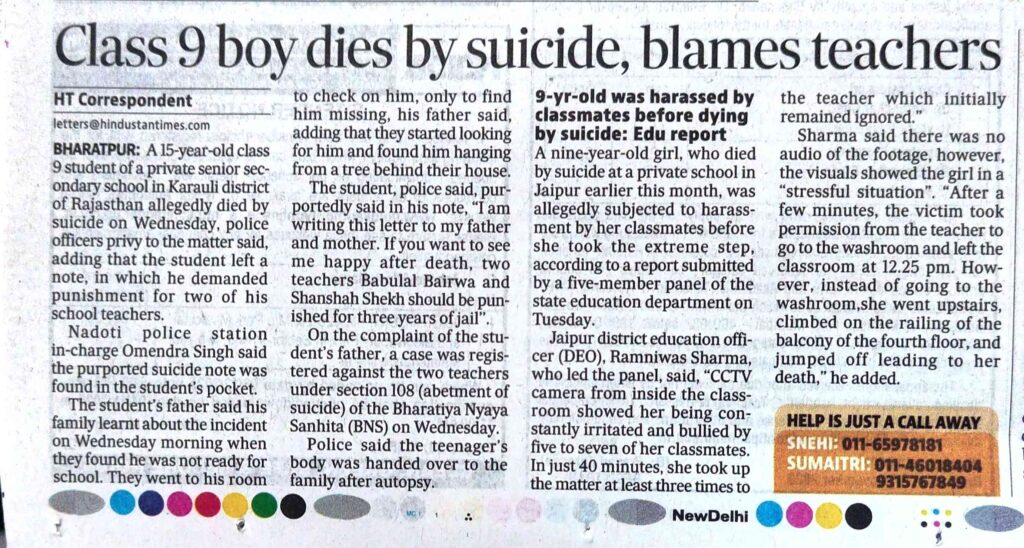
Three young lives cut short by suicide. Different ages, different cities, but the same devastating end. As a psychiatrist, I cannot read such news without a deep sense of dismay. Depression among young people is rising, and the very institutions meant to nurture them—our schools—are sometimes complicit in their despair.
Schools are not merely places of academic instruction. They are meant to be safe, caring environments where children grow into resilient adults. Yet in two recent cases, students explicitly blamed their teachers for their decision to end their lives. They described relentless humiliation, emotional harassment, and the absence of empathy. That is not discipline; it is cruelty.
Where are we failing? Within the classroom itself!
Teachers are meant to be firm yet kind, motivators rather than intimidators. The relationship between teacher and student should be one of mentor and mentee, not bully and victim.
I do not believe teachers are devoid of empathy. But something is breaking down in these relationships—whether through stress, lack of training, or systemic neglect. We must analyze these fractures and learn from them. Corrective action is possible. Teachers can be equipped to support children, and children must feel empowered to seek help—from teachers, counselors, or, when necessary, psychiatrists.
The tragedy is compounded by gender differences. Both boys in these cases died without outward signs of distress, reflecting the evidence that males often complete suicide silently, while girls more frequently express their pain through crying, self-harm, or seeking help. This makes vigilance even more critical.
The third case was a nine-year-old girl who took her life after prolonged bullying, ignored by her teacher. Forty minutes of torment, and no intervention. Such indifference is unforgivable. A teacher’s role is not only to educate but to protect.
We cannot dismiss these deaths as isolated tragedies. They demand systemic change. Workshops must train teachers to recognize emotional distress and respond with empathy. Schools must integrate mental health awareness into their culture, not as an afterthought but as a core responsibility. Teachers should be able to identify signs of depression, guide families toward professional help, and understand that therapy and medication are sometimes necessary.
Talk of societal stress, nuclear families, or lack of time is no longer enough. What we need is action. If we fail to train our teachers to be humane, empathetic, and mentally aware, we fail our children. And when children feel unsupported, they may see death as their only escape.
As a psychiatrist, I am disappointed. But disappointment must lead to solutions. We can—and must—create schools that are not just centers of learning, but sanctuaries of care.
