
Could the attack on Delhi CM have been prevented

When Schools Fail Their Children
December 6, 2025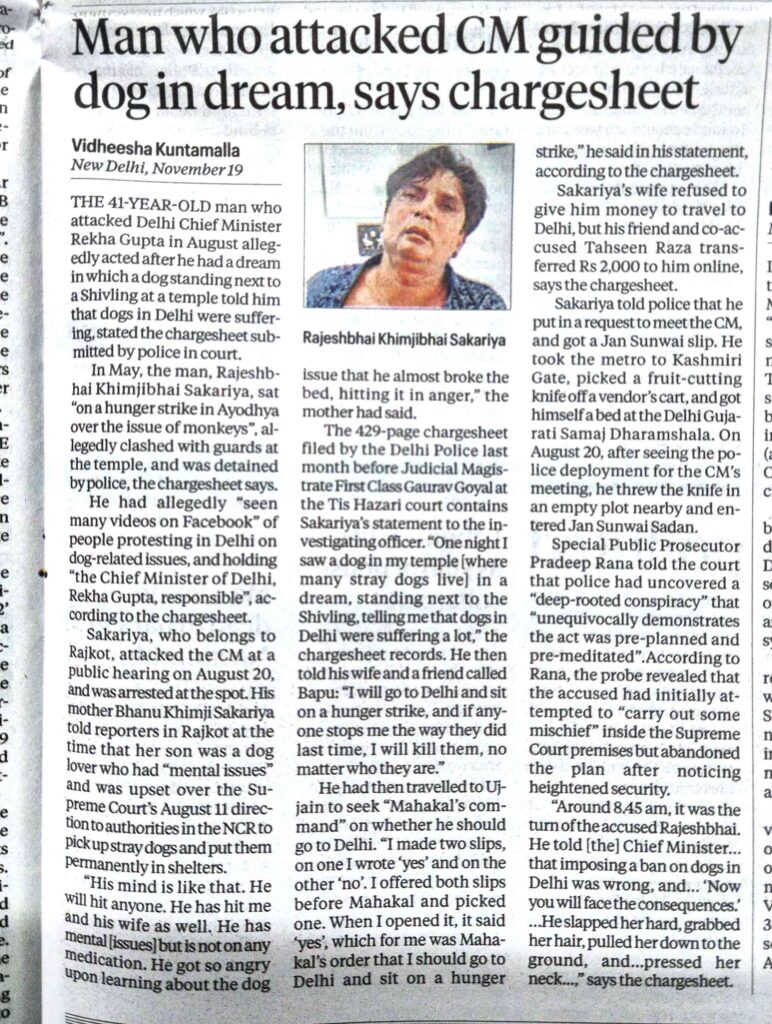
The exhaustive 429-page charge sheet in the attack on the Delhi Chief Minister tells a comprehensive legal story, but it tragically masks a crucial psychiatric failure. The alleged culprit’s immediate post-arrest statements were not just evidence of a crime; they were a missed, loud call for urgent preventative mental healthcare.
This high-profile case exposes a systemic flaw in how India manages individuals on the precipice of violence—a flaw rooted deep within the very legislation designed to protect them: the Mental Healthcare Act (MHCA) of 2017.
1. The Clear and Present Danger: A Missed Diagnosis
A closer look at the facts reveals unmistakable signs of a severe mental disorder:
- Delusional Command: The accused reportedly mentioned seeing a dog talking to him and interpreting this hallucination as a command to travel and attack, displaying classic features of delusional thinking and impaired reality testing.
- Pattern of Behavior: His past history of getting into irrational, aggressive conflicts over petty issues (such as incidents over monkeys in Ayodhya) establishes a pattern of behavior that is pathologically angry, rigid, and destructive.
- Familial Warning: Most tellingly, his mother’s statement—that her son has had “mental issues” and “will hit out” when others disagree—is a clear and desperate indicator of a mental disorder that has been allowed to fester without medical intervention.
This tragic scenario illustrates the devastating cost of untreated illness. This individual’s condition likely precluded stable employment, placing significant financial and emotional burdens on his family, all while escalating his conflicts from petty domestic arguments to a public attack. As a psychiatrist, I can assert that such abnormally assertive and aggressive behavior is highly treatable with proper assessment and medication.
2. The Paradox: The MHCA’s Fatal Loophole
While the government is rightly committed to clamping down on violence, the current legal framework for mental health provides no mechanisms for timely, preventative intervention.
The MHCA, in its noble goal of upholding the human rights of individuals with alleged mental disorders, has created an unintended and catastrophic paradox: It prioritizes the individual’s right to refuse treatment far above the fundamental human rights of the family and the society that individual lives in.
The Act provides no enforcement mechanisms or statutory mandate for psychiatrists to intervene preventatively in non-consensual situations that pose a social risk. When a patient gets angry, threatens, and causes harm within the family—but is not an immediate, certifiable danger—the family, often fearful or in denial, is unable to compel treatment. When treatment is denied, the burden of potential violent actions, and the resulting social, financial, and emotional harm, falls squarely upon the community.
3. A Humane and Necessary Way Forward: Community Treatment Orders
To bridge this dangerous gap between human rights and public safety, India must urgently adopt models proven effective elsewhere, such as Community Treatment Orders (CTOs) and a robust psychosocial support network.
In the Western world, this model involves:
- Proactive Engagement: Dedicated mental health nurses and social workers regularly visit high-risk, non-compliant patients at home to offer and ensure medication adherence.
- De-escalation and Acceptance: The administrative presence, often backed by the CTO, works over time to reduce the patient’s pathological rigidity and aggression. This reduces the need for outright coercion and gradually enables the patient to see the rationale in the medical advice.
- Societal Protection: This administratively binding order and multi-disciplinary support network serve the interest of society at large, upholding the fundamental right to peaceful coexistence for all community members who might otherwise be endangered.
India needs legislative changes that empower professionals to intervene preventatively. We must ensure that essential treatment is not only accessible but received by those who pose a risk to themselves and the public. Only by closing the loopholes in the MHCA can we truly protect the human rights of the patient, their family, and the society they inhabit.
